
How to Stay Hydrated and Healthy During Summer Heat
Why Staying Hydrated Is Important?
Water is essential for life. Up to 60% of an adult body is made of water, and every cell, tissue, and organ depends on it. Proper hydration helps:
- Regulate body temperature
- Transport nutrients and oxygen
- Remove waste from the body
- Cushion joints and organs
- Support digestion and prevent constipation
- Maintain energy, focus, and mood
Without enough water, dehydration can occur, which may lead to:
- Fatigue and dizziness
- Headaches and irritability
- Muscle cramps
- Heat exhaustion or even heat stroke
-
Stay Hydrated For Good Health:

How Much Water Do You Need Daily?
Your daily water requirement depends on factors like age, weight, activity level, climate, and health conditions. General guidelines:
- Women: ~2.7 liters (9 cups) of fluids per day
- Men: ~3.7 liters (13 cups) of fluids per day
Other beverages like tea, milk, and coffee count, but plain water is best.
Quick Tip:
Divide your weight in pounds by 2 to get the number of ounces you should drink. For example, a 160-pound person needs 80 ounces of water daily.
http://How to Stay Hydrated and Healthy During Summer Heat
Signs You Might Be Dehydrated
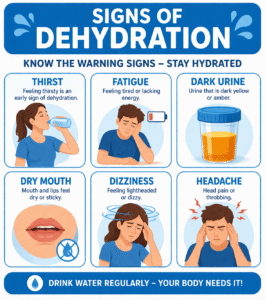
Recognizing dehydration early is important. Look out for:
- Thirst or dry mouth
- Headache, fatigue, dizziness
- Irritability or trouble concentrating
- Dark-colored or infrequent urine
- Rapid heartbeat or breathing
- Muscle cramps
- Nausea or vomiting
Tip:
Profuse sweating is a warning that your body needs fluids, but a sudden lack of sweat may indicate serious dehydration or heat stroke.
1. Thirst or Dry Mouth
Thirst is one of the earliest signs of dehydration. When the body lacks water, saliva production decreases, causing dryness in the mouth and throat. We may feel an urge to drink frequently. Ignoring this sign can lead to further fluid loss. We should respond quickly by drinking water.
2. Headache, Fatigue, Dizziness
Dehydration can reduce blood flow and oxygen to the brain. This often leads to headaches and a feeling of tiredness. We may also feel lightheaded or dizzy, especially in hot weather. These symptoms can affect daily activities. Drinking fluids can help restore energy levels.
3. Irritability or Trouble Concentrating
When the body is low on fluids, brain function may slow down. We may feel irritated, moody, or unable to focus properly. Even mild dehydration can affect memory and concentration. This is common in both students and adults. Staying hydrated helps keep the mind sharp and active.
4. Dark-Colored or Infrequent Urine
Urine color is a key indicator of hydration. Dark yellow or amber urine shows that the body needs more fluids. Infrequent urination is another warning sign. Healthy hydration usually results in light-colored urine. We should drink more water when we notice darker shades.
5. Rapid Heartbeat or Breathing
When dehydrated, the body works harder to maintain normal functions. This can cause an increased heart rate and faster breathing. It happens because blood volume decreases. These symptoms can feel uncomfortable or alarming. Proper hydration helps stabilize heart and breathing rates.
6. Muscle Cramps
Lack of fluids and electrolytes can lead to muscle cramps. These cramps are often painful and sudden. They usually occur during physical activity or in hot conditions. Dehydration affects muscle function and flexibility. Drinking water and maintaining electrolyte balance can prevent cramps.
7. Nausea or Vomiting
Severe dehydration can upset the stomach, causing nausea. In some cases, it may lead to vomiting. This makes dehydration worse as the body loses more fluids. We may also feel weak and uncomfortable. Immediate hydration and rest are important to recover.
Gas And Bloating: Simple Ways To Avoid And How It Affects Our Health:
Practical Tips to Stay Hydrated
Drink Water Regularly
- Start your day with 1 glass of water
- Drink water with meals and snacks
- Carry a reusable water bottle to sip throughout the day
- Don’t wait until
About 20% of your daily water comes from foods. Include:
- Fruits: Watermelon, strawberries, grapefruit, oranges
- Vegetables: Cucumber, celery, tomato, spinach, broccoli, radish, peppers, cauliflower
These foods hydrate and provide essential vitamins, minerals, and fiber.

Follow these hydration steps for exercise:
Before exercise: 17-20 oz 2-3 hours prior
Right before exercise: 8 oz 20-30 minutes prior
During exercise: 7-10 oz every 10-20 minutesAfter exercise: 8 oz within 30 minutes
Before Exercise: 17–20 oz (2–3 Hours Prior)
We should start preparing our body for exercise well in advance. Drinking 17–20 oz of water about 2–3 hours before exercise helps ensure that our body is fully hydrated. This allows enough time for the body to absorb fluids and maintain proper balance. Proper hydration before exercise improves endurance and prevents early fatigue. It also helps regulate body temperature, especially in hot weather conditions.
Right Before Exercise: 8 oz (20–30 Minutes Prior)
We can boost hydration levels by drinking around 8 oz of water 20–30 minutes before starting exercise. This small amount helps top up fluid levels without making us feel heavy or uncomfortable. It ensures that the body starts activity in an optimal hydrated state. This step is especially important for intense workouts or outdoor activities. It also reduces the risk of dehydration during the initial phase of exercise.
During Exercise: 7–10 oz Every 10–20 Minutes
While exercising, our body loses water through sweat, especially in warm environments. We should drink 7–10 oz of water every 10–20 minutes to replace lost fluids. Regular intake prevents dehydration and helps maintain energy levels. It also supports muscle function and reduces the risk of cramps. Staying hydrated during exercise keeps performance steady and prevents dizziness or overheating.
After Exercise: 8 oz Within 30 Minutes
After completing exercise, the body needs to recover and rehydrate. Drinking at least 8 oz of water within 30 minutes helps replace lost fluids quickly. This supports muscle recovery and reduces fatigue. It also helps restore normal body temperature and improves overall recovery. For intense workouts, we may need even more fluids to fully rehydrate.
Stay Hydrated For Good Health:
Tip: If sweating heavily, include sugar-free electrolyte drinks.
Limit Dehydrating Beverages
Avoid:
- Alcohol
- Coffee or caffeinated drinks
- Sugary sodas and energy drinks
These drinks increase fluid loss. If consumed, drink extra water to compensate.
Stay Cool to Protect Your Body
Wear light-colored, breathable clothing
Take breaks in the shade or indoors
Use a cooling towel or damp cloth on the neck
Avoid outdoor activity during peak heat hours

Special Considerations for Vulnerable Groups
Some people need extra caution:
Children: Small bodies and high activity levels increase risk
Older adults: Thirst perception is reduced
People with chronic conditions: Heart, kidney, or thyroid problems
Medication users: Diuretics or antidepressants may affect hydration
Tip: Regularly check urine color, thirst, and energy levels in these groups.
Quick Solutions for Dehydration
If dehydration occurs:
Drink water immediately
Replenish electrolytes with Pedialyte, coconut water, or sugar-free drinks
Eat hydrating fruits and vegetables
Rest in a cool, shaded area
Seek medical attention for severe symptoms: confusion, fainting, or high body temperature
Quick Solutions for Dehydration1. Drink Water Immediately
The fastest way to treat dehydration is to start drinking water right away. We should take small, frequent sips instead of drinking too much at once. This helps the body absorb fluids better. Even mild dehydration can improve quickly with proper water intake. Clean, cool water is always the best first option.
2. Use Oral Rehydration Solutions (ORS)
Oral rehydration solutions are very effective for restoring lost fluids and electrolytes. They contain a balanced mix of salts and sugars that help the body recover faster. We can use ready-made ORS or prepare it at home if needed. This is especially helpful in cases of diarrhea or vomiting. ORS works better than plain water in severe dehydration.
3. Eat Water-Rich Foods
We can improve hydration by eating foods that contain high water content. Fruits like watermelon, oranges, and cucumbers are excellent choices. These foods not only provide fluids but also essential vitamins and minerals. They are easy to digest and refreshing, especially in hot weather. Including them in daily meals supports better hydration.
4. Avoid Caffeine and Sugary Drinks
Caffeinated and sugary drinks can worsen dehydration. They may increase fluid loss or reduce the body’s ability to absorb water properly. We should limit drinks like soda, energy drinks, and excessive tea or coffee. Choosing natural fluids like water or fresh juices is a healthier option. This helps the body recover more effectively.
5. Rest in a Cool Place
When dehydrated, the body needs time to recover. We should rest in a shaded or cool environment to prevent further fluid loss. Avoid direct sunlight and heavy physical activity. Cooling down helps regulate body temperature. This supports faster recovery and reduces stress on the body.
6. Monitor Symptoms Carefully
We should keep an eye on dehydration signs like dizziness, dark urine, or fatigue. If symptoms improve after hydration, it shows recovery is happening. However, if symptoms worsen or do not improve, medical help may be needed. Early attention prevents serious complications. Staying aware is key to safe recovery.
Fun Ways to Encourage Daily Hydration
- Use a favorite water bottle
- Flavor water naturally with fruits or herbs
- Snack on fruits and vegetables instead of sugary items
- Track water intake with apps or journals
- Pair hydration with daily habits, e.g., before meals or workouts
- Healthy Food for Children in Winter: Keep Kids Strong and Active
Tips for Staying Cool While Hydrated
- Wear a wide-brimmed hat
- Opt for light-colored, loose-fitting clothes
- Use fans or cooling towels
- Take breaks in shaded areas
- Avoid peak sun hours (10 AM to 4 PM)
FAQ About Hydration and Summer Heat
How do I know if I’m drinking enough water?
Check urine color: pale yellow = hydrated, dark yellow = drink more water.
H3: Can I drink tea or coffee instead of water?
Yes, but water is best for calorie-free hydration. Tea or coffee counts, but caffeine can slightly dehydrate.
What should I do if I feel dizzy or fatigued?
Move to a cool area, drink water, and rest. If severe, call a doctor.
Do fruits and vegetables help hydration?
Yes, 20% of your daily water comes from food. High-water fruits and vegetables are perfect for hydration.
Conclusion:
Make Hydration a Summer Habit
By following these tips, you can:
- Drink water consistently
- Include hydrating foods in your meals
- Avoid dehydrating drinks
- Monitor warning signs of dehydration
- Protect your body from heat stress
Staying hydrated is essential for energy, focus, and overall health during the hottest months.