The Importance of Staying Hydrated in Summer
We often ignore how important water is for our daily life, especially during the summer season. As the temperature rises, our body starts losing more water through sweat, which can quickly lead to dehydration if not managed properly. We should understand that hydration is not just about drinking water when we feel thirsty—it is about maintaining a balance that keeps our body active, cool, and healthy.
In summer, proper hydration becomes a key factor in protecting our energy levels, improving focus, and preventing serious health problems. By building simple daily habits, we can easily stay hydrated and enjoy the season without any health risks.
Why Hydration is so important in summer?
We should know that nearly 60% of our body is made up of water, and it supports almost every function in our body. During summer, this need increases even more.
Key Benefits of Staying Hydrated
- We can regulate our body temperature naturally
- We can improve digestion and prevent constipation
- We can keep our skin fresh and glowing
- We can support kidney function and toxin removal
- We can maintain energy and mental focus
When we don’t drink enough water, our body struggles to perform these basic functions, which can affect our overall health.
What Happens When We Don’t Drink Enough Water?
Dehydration occurs when our body loses more fluids than it gains. Even mild dehydration can make us feel uncomfortable, while severe dehydration can become dangerous.
Common Signs of Dehydration
- We feel extreme thirst
- Our mouth becomes dry
- We feel tired or weak
- We experience headaches
- Our urine becomes dark yellow
- We may feel dizzy or lightheaded
Ignoring these signs can lead to more serious issues like low blood pressure, kidney problems, or heatstroke.
Who Needs More Hydration in summer?
During summer, not everyone has the same hydration needs. Some people are more sensitive to heat and lose water faster, so we should take extra care of them.
https://www.healthpartnersgroup.com/insights/importance-staying-hydrated-summer
Children and Elderly (Older Adults)
We should give special attention to children and elderly people because their bodies cannot manage heat as efficiently as adults.
Children:
Children are naturally more active—they play, run, and sweat more. Because of this, their bodies lose water quickly. At the same time, they may not realize they are thirsty or forget to drink water while playing. This can easily lead to dehydration.
We should:
- Encourage them to drink water regularly
- Give them fresh juices or water-rich fruits
- Avoid letting them play in extreme heat
Elderly (Older Adults):
Older adults often have a reduced sense of thirst, which means they may not feel the need to drink water even when their body needs it. In addition, their body’s ability to control temperature becomes weaker with age.
We should:
Remind them to drink water frequently
Keep water easily accessible
Monitor signs like dizziness or weakness
Outdoor Workers
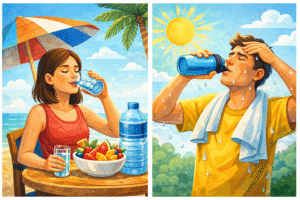
People who work under the sun—such as laborers, farmers, construction workers, and delivery workers—are at high risk of dehydration.
These individuals spend long hours in hot environments, which causes:
- Excessive sweating
- Rapid loss of water and salts
- Increased body temperature
If they do not replace lost fluids, they may feel tired, weak, or even suffer from heat exhaustion.
We should:
Drink water every 20–30 minutes
Take regular breaks in shaded areas
Wear light and breathable clothin
Active Individuals (Athletes & Fitness Lovers)
People who exercise, play sports, or go to the gym lose a large amount of fluids through sweat, especially in summer.
During physical activity:
- The body temperature rises
- Sweat production increases
- Electrolytes are lost along with water
Without proper hydration, performance decreases, and there is a higher risk of muscle cramps, fatigue, and dizziness.
We should:
- Drink water before, during, and after exercise
- Use natural electrolyte drinks if needed
- Avoid intense workouts during peak heat hours
-
People with Health Conditions
Individuals with certain medical conditions or those taking medications need extra care when it comes to hydration.
For example:
- People with diabetes may urinate more frequently, losing more fluids
- Some medicines (like diuretics) increase water loss
- Illnesses like fever, vomiting, or diarrhea can quickly cause dehydration
If hydration is not maintained, these conditions can worsen.
We should:
- Follow doctor’s advice about fluid intake
- Drink water regularly, even without thirst
- Monitor symptoms like weakness, confusion, or dry mouth
we should understand that hydration needs are different for everyone. Children, elderly people, outdoor workers, active individuals, and those with health conditions require extra attention during summer. By taking simple preventive steps, we can protect them from dehydration and keep them healthy and safe.
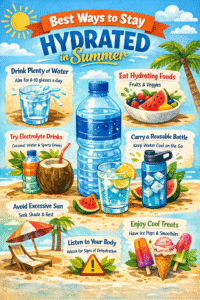
Best Ways to Stay Hydrated in Summer
During summer, our body loses water quickly due to heat and sweating. That’s why we should not only drink water but also follow smart daily habits to stay properly hydrated. Here are the most effective and practical ways:
Make Drinking Water a Daily Habit
We should not wait until we feel thirsty because thirst is actually a late sign of dehydration. Instead, we should build a routine of drinking water throughout the day.
Best Practice:
- Start the morning with 1–2 glasses of water
- Drink a glass before every meal
- Keep sipping water every hour
This habit helps maintain hydration consistently.
Follow a Proper Water Intake Plan
Everyone’s water needs are different, but we should follow a simple guideline:
- At least 6–8 glasses daily
- More if we are sweating or physically active
A smart trick is to carry a water bottle and set small goals for each part of the day.
-
Eat Water-Rich Foods
We can increase hydration not only through drinks but also through food. Many fruits and vegetables contain a high percentage of water.
Best Hydrating Foods:
- Watermelon
- Cucumber
- Oranges
- Strawberries
- Tomatoes
- Lettuce
These foods also provide vitamins and minerals, making them perfect for summer.
Avoid Dehydrating Drinks
Not all drinks help hydration. Some actually make dehydration worse.
We should limit:
- Soft drinks
- Sugary beverages
- Alcohol
- Excess tea and coffee
These drinks can increase fluid loss and reduce the body’s hydration level.
Maintain Electrolyte Balance
When we sweat, we lose not only water but also important minerals like sodium and potassium. These are called electrolytes.
We should:
- Drink coconut water
- Use natural drinks like lemon water with a pinch of salt
- Avoid overly sugary sports drinks
This helps restore the body’s balance and prevents weakness.
Stay Cool to Reduce Water Loss
We can reduce dehydration by keeping our body cool.Simple Tips:
- Wear light and loose clothes
- Stay in shaded or cool areas
- Avoid going out during peak heat (12–4 PM)
- Use fans or air conditioning
When our body stays cool, it sweats less and saves water.
Always Carry a Water Bottle
We should make it a habit to carry water wherever we go. This ensures we never forget to drink water.
Tip:
- Use a reusable bottle
- Keep it filled and within reach
- Take small sips frequently
-
Drink More During Physical Activity
When we exercise or work outdoors, our body loses more fluids through sweat.
We should:
- Drink water before activity
- Sip water during activity
- Rehydrate after finishing
This prevents fatigue, cramps, and dizziness.
Add Natural Flavors to Water
If plain water feels boring, we can make it more refreshing.
Add:
- Lemon
- Mint
- Cucumber
- Berries
This makes water tasty and encourages us to drink more.
Plan Ahead for Hot Days
We should prepare in advance when going outside in summer.
We should:
- Carry extra water
- Freeze a bottle to keep it cool longer
- Avoid long exposure to heat
Planning helps prevent dehydration before it starts.
Set Reminders to Drink Water
Sometimes we forget to drink water during busy routines.
Solution:
- Set mobile reminders
- Use hydration apps
- Drink water at fixed times
This builds a strong hydration habit.
Conclusion
Staying hydrated in summer is not difficult if we follow simple daily habits. We should drink water regularly, eat hydrating foods, avoid harmful drinks, and keep our body cool. By taking these small steps, we can stay energetic, healthy, and safe even in extreme heat.
Make Water a Daily Habit
We should drink water regularly, not just when we feel thirsty. Starting the day with a glass of water can make a big difference.
Follow the Right Water Intake
We can follow a simple rule:
- 6–8 glasses daily minimum
- More if we sweat or exercise
- Eat Hydrating Foods
We should include water-rich foods in our diet:
- Watermelon
- Cucumber
- Oranges
- Strawberries
- Tomatoes
These foods provide hydration along with essential nutrients.
Avoid Drinks That Dehydrate
We should reduce:
- Sugary drinks
- Soft drinks
- Alcohol
- Too much caffeine
These can increase water loss instead of helping hydration.
Keep Your Body Cool
We can reduce dehydration by:
- Wearing light and loose clothes
- Staying in shaded areas
- Avoiding direct sun during peak hours
-
Always Carry a Water Bottle
We should make it a habit to carry water everywhere. This helps us drink regularly without forgetting.
Rehydrate After Sweating
After exercise or outdoor activity, we should drink extra water to replace lost fluids.
Add Flavor to Water
If we don’t like plain water, we can add:
- Lemon
- Mint
- Cucumber
- Berries
This makes drinking water more enjoyable.
Plan Before Going Out
We should always:
- Carry enough water
- Freeze a bottle for long trips
- Avoid going out in extreme heat
-
Maintain Electrolyte Balance
We should sometimes include natural drinks like coconut water to maintain electrolyte balance, especially after heavy sweating.
Simple Daily Hydration Routine
We can follow this easy routine:
- Morning: 1 glass of water
- Before meals: 1 glass
- During the day: sip regularly
- After activity: extra water
This routine keeps our body consistently hydrated.
Conclusion
Staying hydrated in summer is one of the easiest ways to protect our health. We should not wait until we feel thirsty, but instead make hydration a part of our daily routine. By drinking enough water, eating healthy foods, and avoiding dehydration-causing habits, we can stay energetic, focused, and safe during hot weather.
FAQ Section
How can we tell if we are dehydrated?
We can check signs like thirst, dark urine, fatigue, and dizziness.
Is drinking water the only way to stay hydrated?
No, we can also get hydration from fruits and vegetables.
How much water should we drink daily in summer?
At least 6–8 glasses, but more if we are active.
Can cold drinks replace water?
No, water is the best and healthiest option.